
Follow us on our networks



 Letras de Altata, Navolato, Sinaloa





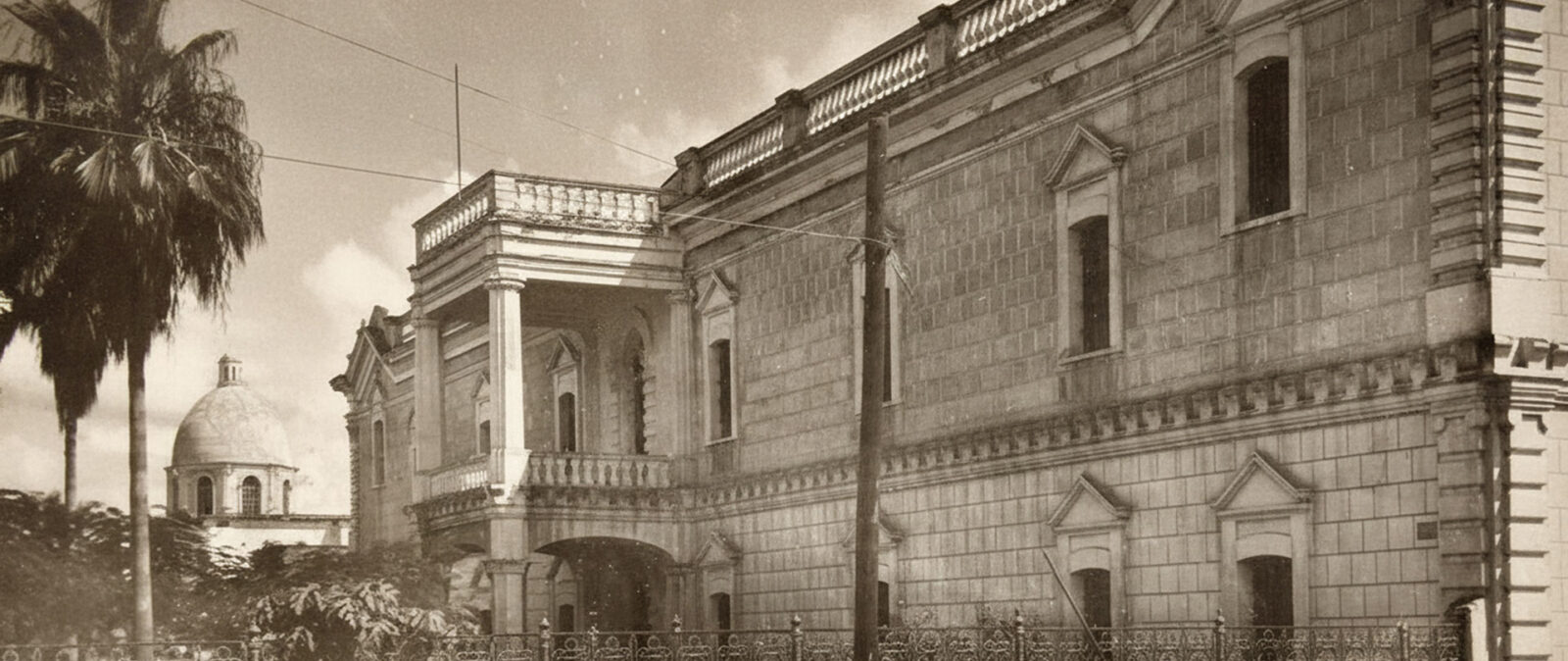
The story of Culiacán flows in its streets, in its squares and in its people, which maintains a cheerful spirit and a deep pride in its roots. To know Culiacán is to travel through a past that continues to grow, evolve and celebrate every day.



The region could have been a key site in the rise of the cult of Huitzilopochtli.
The most important pre-Hispanic settlement in the area dates back to 628 A.D., and was known as Huey Colhuacan. According to the archaeological findings, it was located near what is now Culiacancito.
Several studies maintain that, during their pilgrimage to the Valley of Mexico, the Mexicas passed through this region. Some versions even claim that here the cult of Huitzilopochtli emerged and that the mythical Aztlan could have been in its vicinity.
The original settlement was founded by the Colhua Nahualtec tribe. The name Colhuacan comes from the Nahuatl: Thus, Culiacán can be interpreted as “Place of those who worship the god Coltzin”.


The Villa de San Miguel de Culiacán was born, entrusted to the Archangel San Miguel.
Founded in 1531 under the name of San Miguel de Culiacán. Since then it has been a meeting point between cultures, a strategic place for trade and development, and the birthplace of traditions that endure until today. To walk through its streets is to connect with its indigenous, colonial and contemporary past, which is reflected in its architecture, museums, squares and in the cheerful spirit of its people.
It was on September 29, 1531 when, by disposition of the Spanish conquistador Nuño Beltrán de Guzmán, the first formal settlement was established in the region. Although the precise date is not known, it was adopted that day to coincide with the feast of Archangel Michael, to whom the initial town was entrusted.

The first European contact in the area was with the tahues, a local indigenous group. Thebacks, pacajes, sabaibos and achires also inhabited the region. The colonizers defined the province of Culiacán with limits between the Elota (south) and Mocorito (to the north) rivers, integrating it into the Kingdom of Nueva Galicia. This organization remained until 1786, when the territories of Sonora y Sinaloa merged with the intendances in the supply of Arizpe.
With the arrival of the Spanish, headed by Nuño Beltrán de Guzmán and Lázaro de Cebreros, the Villa de San Miguel was established, which would later take the name of Culiacán. This enclave became the basis for the exploitation, evangelization and colonization of the northwest Novo-Hispanian. Between the end of the 16th and early 17th centuries, the place acquired a character of viceroyal settlement, retaining its denomination until the Independence of Mexico.

With the independence triumph, Culiacán ceased to be a village. On October 6, 1821, the freedom of the Spanish Crown was proclaimed, and on July 21, 1823 he was granted the title of city, after separating the provinces of Sonora and Sinaloa. However, in 1824 both reunited in the Western State, a situation that changed definitively in 1830, when the State of Sinaloa was constituted and Culiacán was designated its capital.
The religious relevance of the city was consolidated on May 12, 1842, when Bishop Lázaro de la Garza and Ballesteros laid the foundation stone of the Cathedral, officializing Culiacán as episcopal see.

Textile factories and sugar ingenuity drive the economy.
Towards the end of the 19th century, the city entered a phase of industrialization, with textile factories, a sugar mill and other companies that boosted the economy. However, this boom was interrupted during the Mexican Revolution.
In 1913, General Álvaro Obregón took Culiacán, and in the conflict some factories were occupied and an almost entirely burned.

The work strengthens agricultural production and the agro-industrial vocation.
After the armed struggle, economic activity was reoriented towards agriculture, taking advantage of the fertility of the valley. The development was reinforced with hydraulic projects, such as the Sanalona dam started in 1948, which consolidated Culiacán as the agricultural capital of Sinaloa and a national reference in field production.